What Florida’s Hurricane Building Code Means for a New Home in North Port
If you are buying a home in North Port, Port Charlotte or anywhere in Sarasota and Charlotte Counties, hurricanes are part of the conversation. One of the biggest differences between a brand-new home and an older resale home is the building code it was built under. This guide explains, in plain language, what Florida’s statewide code covers, how it affects wind, roof, window and flood decisions, and how it can show up on your insurance bill. It is general information, not engineering, legal or insurance advice; always confirm details for a specific home with the builder, the permit documents and your insurance agent.
One statewide code, updated on a regular cycle
Florida adopts a single statewide Florida Building Code that every new home must meet. The code is updated on a roughly three-year cycle; the current 8th Edition (2023) took effect on December 31, 2023. A home permitted today is designed to the current edition, while a home built decades ago was built to whatever rules applied then, which in many cases were far less demanding about wind and water.
Wind design is set for each address
Under the current code, the design wind speed for a home is determined for its specific location using the ASCE 7-22 wind hazard maps, rather than one number for the whole county. The structure, roof, connections, windows and doors are then designed for the wind pressures that apply at that address. If you want to see the value for a particular home, ask for it; it is part of the permit and engineering documents.
Roofs and connections
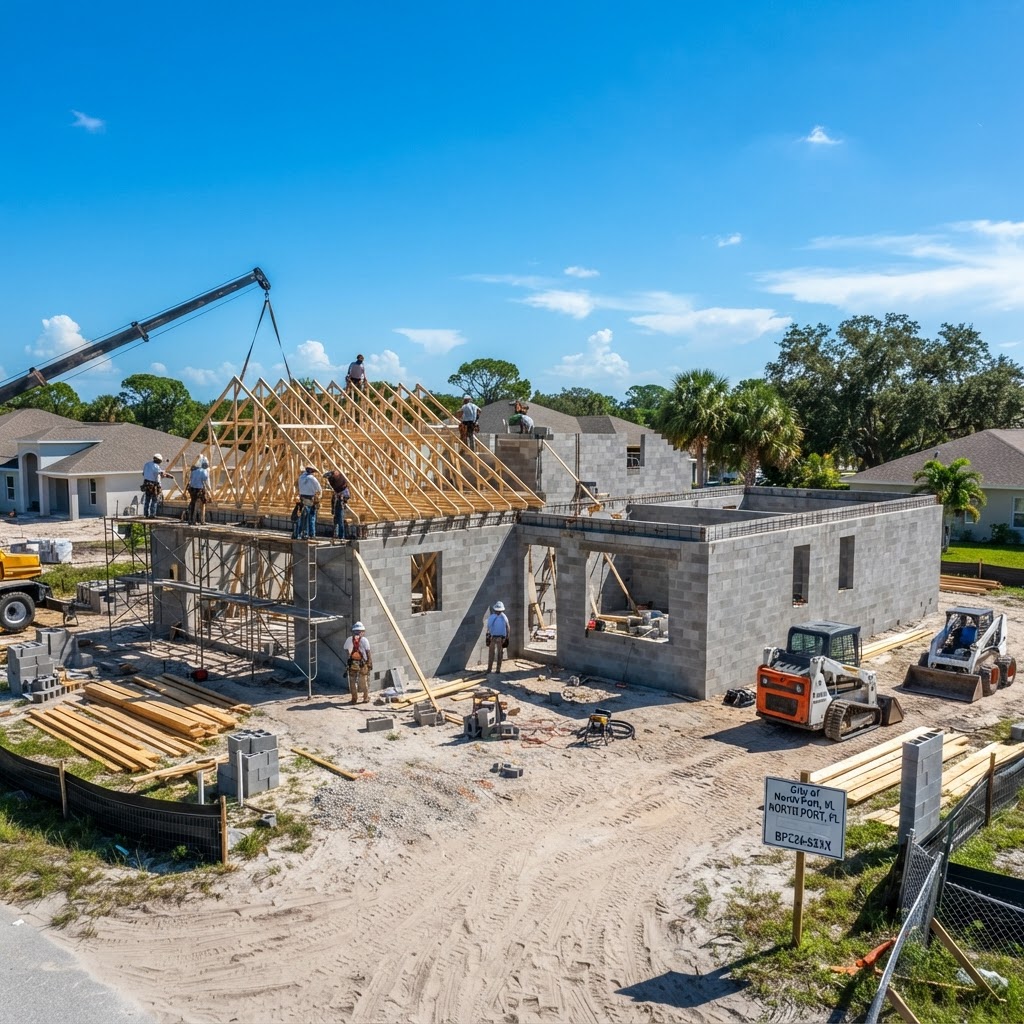
Much of the damage in a hurricane starts at the roof. Current code addresses how the roof deck is attached, how the roof is tied to the walls, how the roof covering is installed and how water is kept out if shingles or tiles are lost. Every DCA home comes with a brand-new roof built to the current Florida Building Code.
Windows, doors and garage doors
In wind-borne debris areas the code requires windows and doors to be impact-rated or protected by approved shutters, and garage doors must be rated for the design wind pressure. Ask which protection a specific home uses, because it matters for both safety and insurance.
Flood zones are a separate question
Wind and flood are handled differently. Every lot falls in a FEMA flood zone, and that zone affects how high the home must be built and whether a lender will require flood insurance. Building code compliance does not mean a home is outside a flood zone. DCA checks each lot’s FEMA flood zone and shares it for every home, so you can talk to your insurance agent before you commit.
How the code can lower insurance costs
Florida law (Section 627.0629, Florida Statutes) requires insurers to offer premium discounts for qualifying windstorm mitigation features. Those features are documented on the state’s Uniform Mitigation Verification Inspection Form, OIR-B1-1802, completed by an authorized inspector during a wind mitigation inspection. The form can remain valid for up to five years if the home is not materially changed. Because a new home is built to the current code with a new roof, it is often well positioned for these credits, but the actual discount depends on the insurer and the inspection. Ask your insurance agent for quotes on a specific address before you buy.
Questions to ask any builder
- Which edition of the Florida Building Code was the home permitted under?
- What is the design wind speed for this address?
- How are windows, doors and the garage door protected?
- What is the lot’s FEMA flood zone and the finished floor elevation?
- Will you provide the documents my insurer needs for a wind mitigation inspection?
- What does the warranty cover, and for how long?
See homes built to the current code
DCA Florida Homes builds new single-family homes in North Port and Port Charlotte on 10,000+ sq ft lots, including canal lots, each with a new roof, the current Florida Building Code and a warranty. Browse what is available and coming soon on our Homes for Sale page, compare floor plans on our Models page, or read our step-by-step guide to buying new construction in North Port. You can also compare new build vs. resale, explore new homes in North Port and Port Charlotte, or review our warranty.
Agents with clients relocating from out of state: learn about our referral program.
Agent Referral ProgramHurricane Building Code FAQ
Are new homes in Florida built to withstand hurricanes?
New homes must meet the current Florida Building Code, which sets wind design requirements for each location and covers roofs, connections, windows and doors. No home is hurricane-proof, but current code is much more demanding than the rules many older homes were built under.
What is the current Florida Building Code edition?
The 8th Edition (2023) Florida Building Code took effect on December 31, 2023.
Does a new home get a wind mitigation insurance discount?
Florida requires insurers to offer discounts for qualifying wind mitigation features, documented on form OIR-B1-1802. New homes built to current code are often well positioned, but the discount depends on your insurer and the inspection.
Does building code compliance mean I don’t need flood insurance?
No. Flood risk depends on the lot’s FEMA flood zone and elevation. DCA shares each lot’s flood zone so you can check insurance before you buy.
See new homes in North Port & Port Charlotte
Browse homes for sale and coming soon, or get in touch with our team.